7 Shocking Ways Your Online Activity Is Being Tracked Right Now (And What You Can Do About It)
Technology Tech
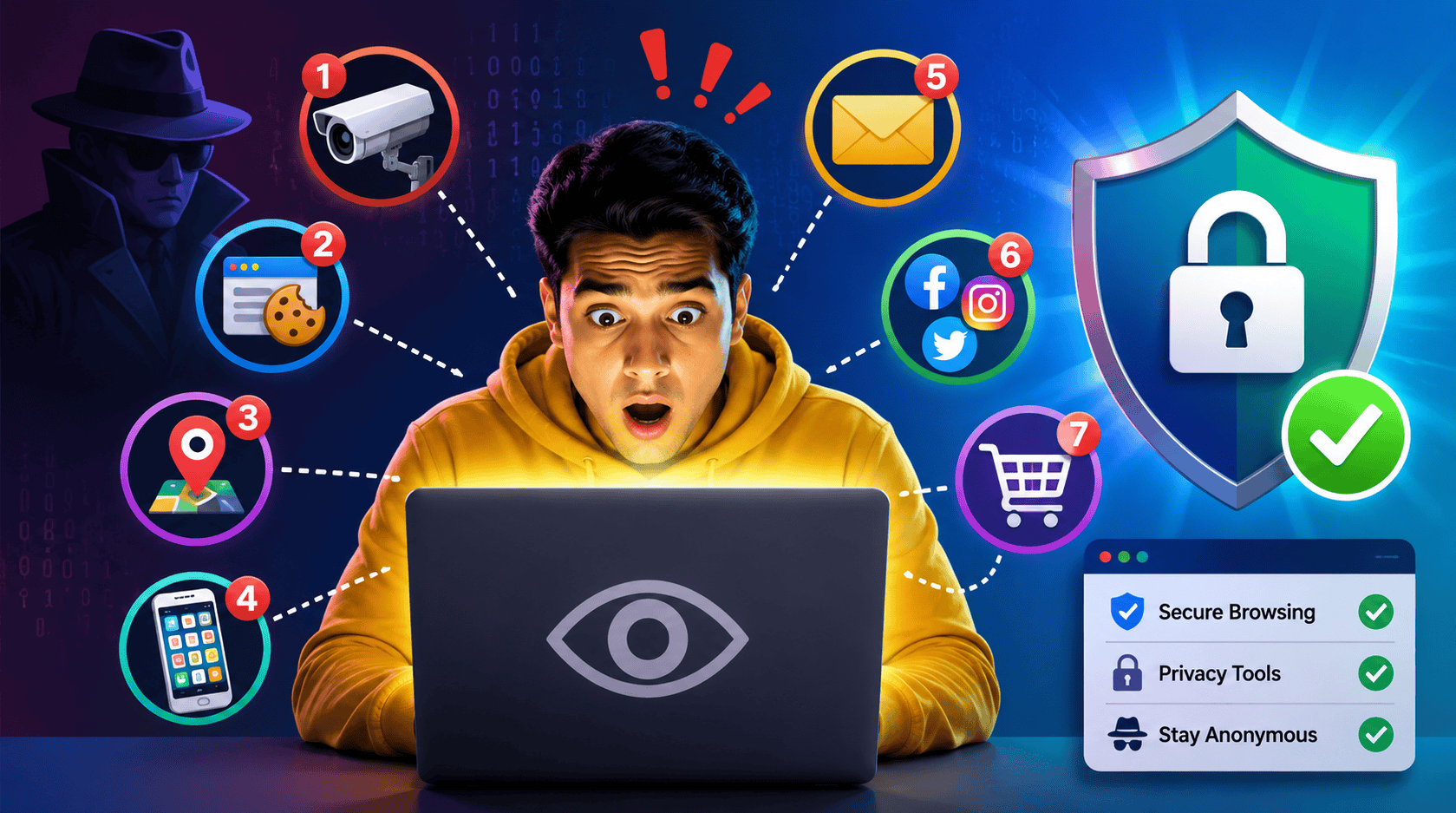
Most people assume that browsing the internet is a private activity.
It isn't.
Every day, millions of people unknowingly leave behind digital footprints that reveal where they live, what they buy, what they search for, and even what they might purchase next.
The surprising part isn't that companies collect data—it's how much they know.
Let's look at seven ways your online activity may be tracked right now.
1. Your Internet Service Provider Can See More Than You Think
Every website you visit passes through your Internet Service Provider (ISP).
Depending on local regulations, ISPs may collect information about your browsing activity, connection times, and online behavior. This data can be stored, analyzed, and in some regions even shared with third parties.
Many users never realize how much visibility their ISP has into their digital lives.
2. Public WiFi Networks Aren't Always Safe
That free WiFi at the airport, hotel, or coffee shop might be convenient, but it can also create opportunities for cybercriminals.
Poorly secured networks can expose browsing sessions, login credentials, and sensitive information.
Many travelers use public WiFi daily without considering the risks.
3. Websites Track Your Behavior Across the Internet
Ever searched for a product and then seen ads for it everywhere?
That's not a coincidence.
Many websites use tracking technologies that monitor your activity across multiple sites, building detailed profiles of your interests and habits.
Over time, advertisers can learn a surprising amount about your lifestyle.
4. Data Brokers Collect and Sell Information
An entire industry exists around collecting and selling consumer data.
These companies aggregate information from numerous sources to create extensive profiles that can be purchased by marketers and businesses.
Most people never know what information has been collected about them.
5. Your Location Can Be Inferred Online
Even if you don't actively share your location, websites and online services can often estimate where you're connecting from based on your IP address.
This information can be used for targeted advertising, content personalization, and data collection.
6. Cybercriminals Are Constantly Looking for Opportunities
Hackers don't always target large corporations.
Individual users are frequently targeted through phishing attacks, unsecured connections, and stolen credentials.
One weak point can expose valuable personal information.
7. Your Digital Profile Is Growing Every Day
Every search, click, purchase, and website visit contributes to a larger digital profile.
Over months and years, this profile becomes increasingly detailed.
Many users are surprised to learn how much information has accumulated about them.
So What Can You Do?
While it's nearly impossible to eliminate online tracking completely, there are practical steps that can significantly improve your privacy and security.
One of the most effective tools is a Virtual Private Network (VPN).
A VPN encrypts your internet connection and helps protect your online activity from unwanted visibility.
Why Many Users Choose NordVPN
Among the many VPN services available today, NordVPN has become one of the most recognized names in the industry.
Users often choose it because it offers:
Whether you're working remotely, traveling, streaming content, or simply browsing the web, a VPN can add an important layer of protection.
Final Thoughts
The internet offers incredible convenience, but it also creates new privacy challenges.
Most people don't realize how much information they're sharing every day until they see the bigger picture.
Understanding the risks is the first step.
Taking action is the second.
If online privacy matters to you, exploring a trusted VPN service like NordVPN may be one of the simplest upgrades you can make to your digital security.
Search
Categories
Recent News
- 15 Common Technology Myths That Need to Die
- The Fascinating Evolution of AI: From Rule-Based Systems to Intelligent Agents
- The Environmental Impact of Modern Technology
- The Best Tech Skills to Learn for the Next 10 Years
- How to Speed Up a Slow Laptop Without Buying New Hardware
- Cloud Storage Explained: Everything You Need to Know
- Top 10 Browser Extensions That Will Instantly Make You More Productive
- 10 Emerging Technologies That Could Transform the Next Decade
Popular News
- The Modern Football Fans Secret Weapon
- 10 Common Online Habits That Put Your Personal Data at Risk
- 7 Shocking Ways Your Online Activity Is Being Tracked Right Now (And What You Can Do About It)
- 10 AI Tools That Can Save You 10+ Hours Every Week
- 10 Emerging Technologies That Could Transform the Next Decade