The Environmental Impact of Modern Technology
Technology Tech
Introduction
Modern technology has transformed nearly every aspect of daily life, from communication and transportation to healthcare and entertainment. While these advancements have improved productivity and convenience, they also come with environmental consequences. As the world becomes increasingly dependent on digital devices, cloud computing, and artificial intelligence, understanding the environmental impact of technology has become more important than ever.
The challenge lies in balancing innovation with sustainability to ensure long-term environmental health.
Key Concepts and Overview
Energy Consumption and Data Centers
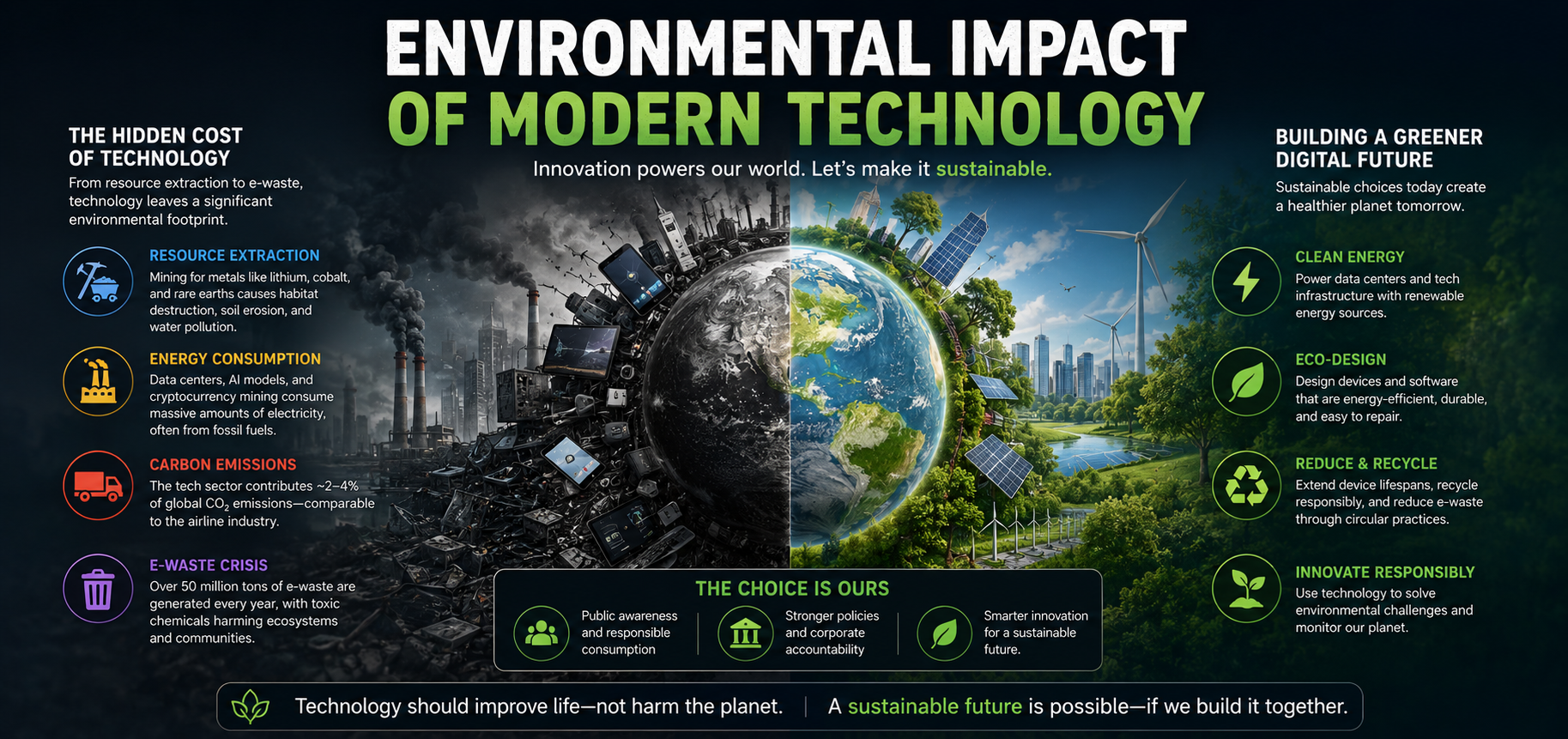
Many digital services rely on massive data centers that operate around the clock. These facilities power cloud storage, streaming platforms, artificial intelligence systems, and online applications. Although data centers have become more energy-efficient in recent years, they still consume significant amounts of electricity.
Electronic Waste (E-Waste)
The rapid pace of technological innovation encourages frequent device upgrades. As a result, millions of smartphones, laptops, tablets, and other electronics are discarded each year. Improper disposal of electronic waste can release hazardous materials into the environment and contribute to pollution.
Resource Extraction
Modern devices require rare earth elements and valuable metals such as lithium, cobalt, and nickel. Mining these materials can impact ecosystems, increase carbon emissions, and place pressure on natural resources.
Benefits and Real-World Applications
Despite these challenges, technology also plays a crucial role in environmental protection.
Supporting Sustainability Efforts
Advanced technologies help organizations monitor energy usage, reduce waste, and optimize supply chains. Smart sensors, Internet of Things (IoT) devices, and AI-powered analytics enable businesses to improve efficiency while lowering environmental impact.
Renewable Energy Innovation
Technology has accelerated the adoption of renewable energy solutions. Improved battery storage systems, smart grids, and energy management platforms help make solar and wind power more reliable and accessible.
These innovations demonstrate how technology can be both a contributor to environmental challenges and a powerful tool for solving them.
Challenges and Considerations
One of the biggest concerns is the growing demand for computing power. Artificial intelligence, cryptocurrency systems, and large-scale cloud infrastructure require substantial energy resources.
Additionally, recycling electronic devices remains a global challenge. Many products are difficult to repair or recycle, leading to increased waste generation. Businesses and consumers must consider product lifecycles and sustainability practices when purchasing technology.
Future Trends and Innovations
The technology industry is increasingly investing in green initiatives. Companies are developing energy-efficient chips, sustainable manufacturing processes, and recyclable device components.
Artificial intelligence is also being used to optimize energy consumption, improve environmental monitoring, and support climate research. Meanwhile, circular economy models encourage repairing, reusing, and recycling devices rather than replacing them.
These trends suggest that future technological growth may become more aligned with sustainability goals.
Conclusion
Modern technology delivers enormous benefits, but it also has environmental costs. From energy-intensive data centers and resource extraction to growing e-waste concerns, the industry faces important sustainability challenges. However, continued innovation in renewable energy, efficient computing, and responsible manufacturing offers promising solutions. By embracing sustainable technology practices, businesses and consumers can help reduce environmental impact while continuing to benefit from technological progress.
Search
Categories
Recent News
- 15 Common Technology Myths That Need to Die
- The Fascinating Evolution of AI: From Rule-Based Systems to Intelligent Agents
- The Environmental Impact of Modern Technology
- The Best Tech Skills to Learn for the Next 10 Years
- How to Speed Up a Slow Laptop Without Buying New Hardware
- Cloud Storage Explained: Everything You Need to Know
- Top 10 Browser Extensions That Will Instantly Make You More Productive
- 10 Emerging Technologies That Could Transform the Next Decade
Popular News
- The Modern Football Fans Secret Weapon
- 10 Common Online Habits That Put Your Personal Data at Risk
- 7 Shocking Ways Your Online Activity Is Being Tracked Right Now (And What You Can Do About It)
- 10 AI Tools That Can Save You 10+ Hours Every Week
- 10 Emerging Technologies That Could Transform the Next Decade