The Fascinating Evolution of AI: From Rule-Based Systems to Intelligent Agents
Technology Tech
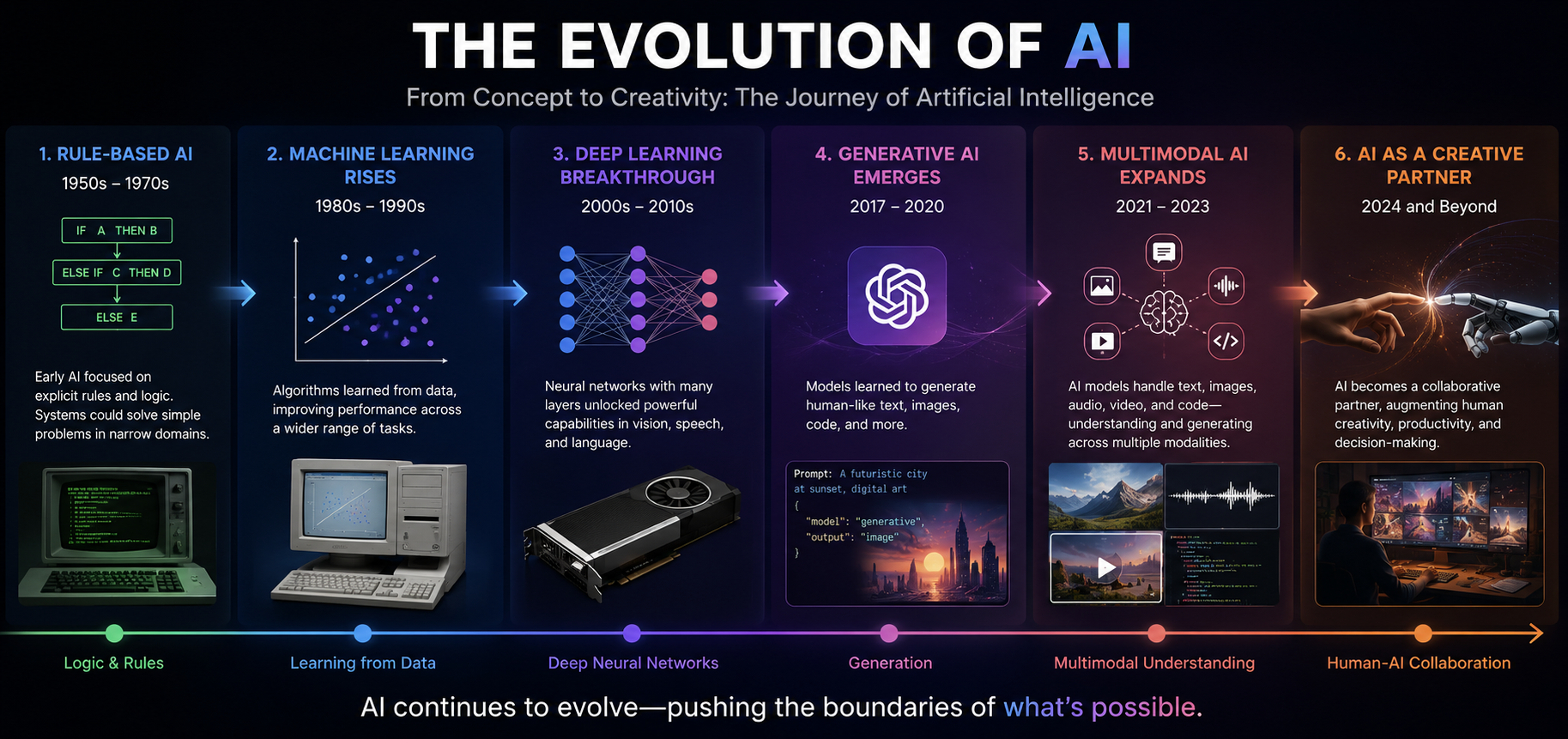
Introduction
Artificial intelligence (AI) has evolved from a niche research concept into one of the most transformative technologies of the modern era. Today, AI powers search engines, virtual assistants, recommendation systems, autonomous vehicles, and business automation tools. However, the journey to modern AI has been decades in the making. Understanding how AI evolved—from simple rule-based systems to intelligent agents capable of learning and reasoning—provides valuable insight into where the technology is headed next.
Key Concepts and Overview
The Era of Rule-Based Systems
The earliest AI systems relied on predefined rules created by human experts. Known as expert systems, these programs followed "if-then" logic to solve specific problems.
For example, a medical expert system could suggest diagnoses based on a fixed set of symptoms and rules. While effective in limited scenarios, these systems struggled when faced with unfamiliar situations or incomplete information.
The Rise of Machine Learning
A major breakthrough occurred when researchers shifted from programming rules to training algorithms with data. Machine learning enabled computers to identify patterns, make predictions, and improve performance over time.
This approach fueled advances in speech recognition, image classification, fraud detection, and recommendation engines used by major technology platforms.
The Deep Learning Revolution
The growth of computing power and data availability accelerated the development of deep learning. Neural networks with multiple layers became capable of handling complex tasks such as language translation, image generation, and natural language processing.
Modern AI models can now understand context, generate human-like responses, and perform tasks once considered uniquely human.
The Age of Intelligent Agents
Today's AI systems are increasingly evolving into intelligent agents that can plan, reason, execute tasks, and interact with digital environments autonomously. These agents can manage workflows, conduct research, analyze information, and assist users across various applications.
Benefits and Real-World Applications
AI has transformed industries worldwide. Businesses use AI for customer support, predictive analytics, and process automation. Healthcare providers leverage AI for diagnostics and medical research, while financial institutions use it to detect fraud and assess risk.
The rise of intelligent agents is also increasing workplace productivity by automating repetitive tasks and helping professionals make faster, data-driven decisions.
Challenges and Considerations
Despite its benefits, AI presents important challenges. Ethical concerns, algorithmic bias, privacy issues, and transparency remain key topics of discussion.
Organizations must also balance innovation with responsible AI governance to ensure systems operate fairly, securely, and in compliance with regulations.
Future Trends and Innovations
The future of AI is likely to focus on autonomous agents, multimodal systems, and collaborative human-AI workflows. Emerging technologies may enable AI to understand text, images, video, and voice simultaneously while performing increasingly sophisticated tasks.
As AI becomes more integrated into everyday life, businesses and individuals will need to adapt to a world where intelligent systems act as digital collaborators rather than simple tools.
Conclusion
The evolution of AI from rule-based systems to intelligent agents reflects one of the most significant technological advancements in history. What began as rigid, rule-driven software has transformed into adaptive systems capable of learning, reasoning, and assisting humans in powerful new ways. As AI continues to evolve, its impact on business, society, and innovation is expected to grow even further, shaping the future of technology for decades to come.
Search
Categories
Recent News
- 15 Common Technology Myths That Need to Die
- The Fascinating Evolution of AI: From Rule-Based Systems to Intelligent Agents
- The Environmental Impact of Modern Technology
- The Best Tech Skills to Learn for the Next 10 Years
- How to Speed Up a Slow Laptop Without Buying New Hardware
- Cloud Storage Explained: Everything You Need to Know
- Top 10 Browser Extensions That Will Instantly Make You More Productive
- 10 Emerging Technologies That Could Transform the Next Decade
Popular News
- The Modern Football Fans Secret Weapon
- 10 Common Online Habits That Put Your Personal Data at Risk
- 7 Shocking Ways Your Online Activity Is Being Tracked Right Now (And What You Can Do About It)
- 10 AI Tools That Can Save You 10+ Hours Every Week
- 10 Emerging Technologies That Could Transform the Next Decade