The Modern Football Fans Secret Weapon
Sports Football
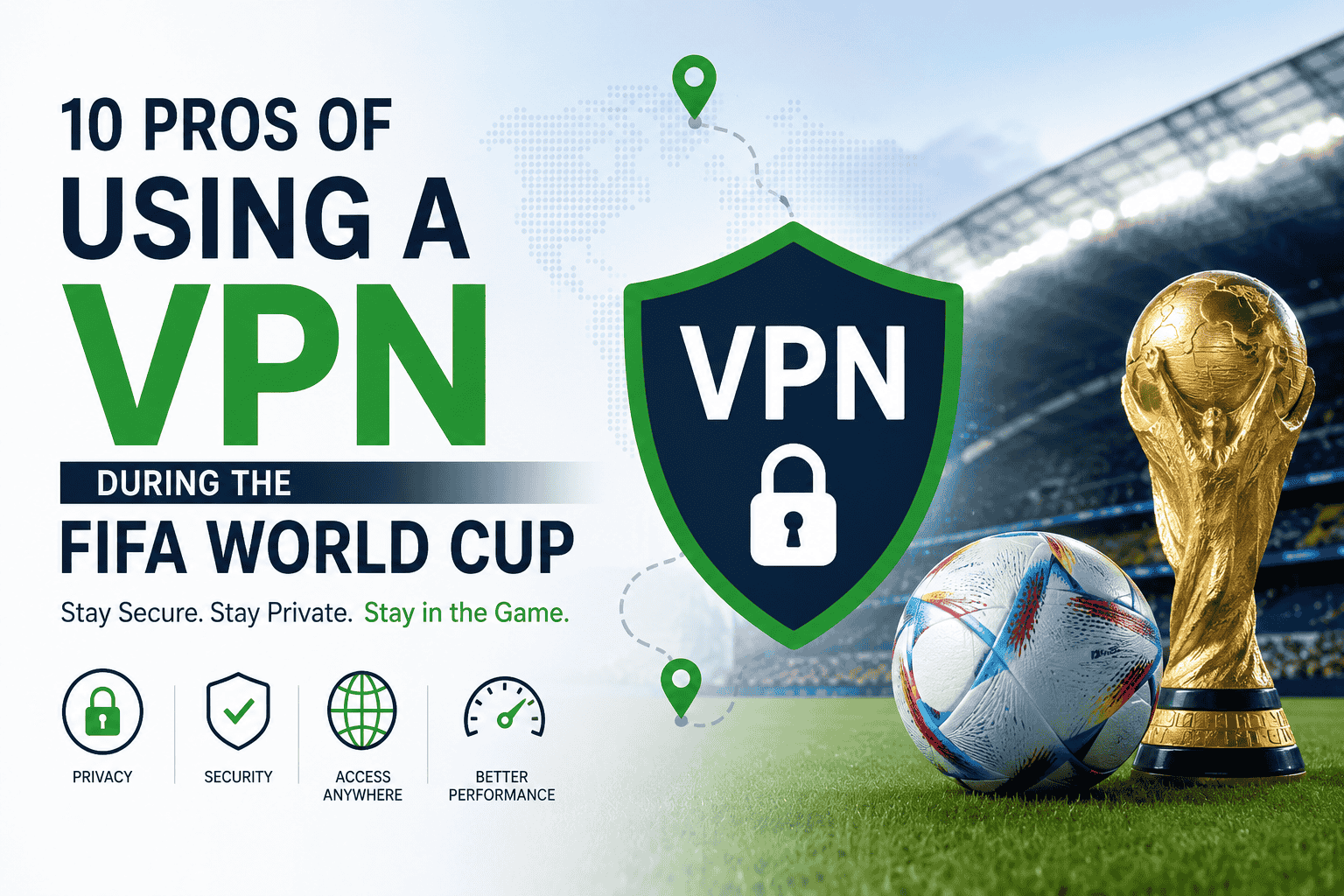
You've planned your evening around a crucial FIFA World Cup match. Snacks are ready, friends are texting in anticipation, and kickoff is only minutes away.
Then reality strikes.
The match isn't available on your local broadcaster. The stream is geo-restricted. The platform you're subscribed to suddenly shows different content because you're traveling. Or worse, your internet connection starts slowing down precisely when the game reaches extra time.
For many football fans, these situations are frustratingly common.
This is one reason Virtual Private Networks (VPNs) have become increasingly popular among sports enthusiasts worldwide. While VPNs are often associated with cybersecurity, their practical benefits extend far beyond privacy.
Whether you're following every FIFA World Cup match, traveling internationally, working remotely, or simply looking for a safer internet experience, a VPN can be one of the most useful digital tools available today.
Let's explore why.
What Exactly Is a VPN?
A Virtual Private Network (VPN) creates an encrypted connection between your device and the internet.
Instead of websites, advertisers, internet service providers, and public Wi-Fi operators seeing your real location and internet activity directly, your traffic passes through a secure VPN server first.
Think of it as driving through a secure tunnel rather than an open highway.
The result?
Enhanced privacy
Improved security
Reduced tracking
Greater flexibility when accessing online services while traveling
And for football fans, several additional advantages.
Watch the FIFA World Cup While Traveling
One of the biggest frustrations for sports fans is discovering that streaming access changes when crossing borders.
A subscription that works perfectly in one country may not provide the same content in another.
Imagine:
A business trip during the World Cup
A vacation abroad
A long-term stay in another country
Many fans suddenly find themselves unable to access the services they normally use at home.
A VPN can help maintain access to your preferred online services while traveling by connecting through a server in your home region, subject to the service provider's terms and local laws.
Check current offers for Nord VPN
Better Security on Public Wi-Fi
World Cup season often means:
Airports
Hotels
Sports bars
Cafes
Co-working spaces
All of these commonly provide public Wi-Fi.
Unfortunately, public networks can expose users to risks such as:
Data interception
Fake Wi-Fi hotspots
Credential theft
Session hijacking
A VPN encrypts your internet traffic, making it significantly more difficult for attackers to access sensitive information.
This becomes especially important if you're:
Checking bank accounts
Logging into email
Using payment apps
Managing business accounts
while connected to public networks.
Protect Your Privacy From Excessive Tracking
Most internet users are surprised by how much information is collected about them daily.
Companies can often build detailed profiles based on:
Browsing habits
Search history
Location data
Device information
Shopping behavior
A VPN helps reduce the amount of information exposed to third parties.
While it doesn't make you completely anonymous, it adds an important layer of privacy that many users find valuable.
For people concerned about digital privacy, this benefit alone often justifies using a VPN.
Learn more about privacy-focused SurfShark VPN protection
Reduce Risks During International Travel
International travel creates unique cybersecurity challenges.
When connecting through unfamiliar networks, users may unknowingly expose sensitive data.
VPNs provide:
Encrypted connections
More secure remote access
Protection against certain network-based threats
Additional privacy while abroad
For digital nomads, remote workers, and frequent travelers, a VPN often becomes as essential as a passport or travel adapter.
Secure Remote Work and Business Activities
Remote work is now a permanent reality for millions of professionals.
Whether you're:
Accessing company resources
Managing client accounts
Handling confidential files
Conducting video meetings
security matters.
A VPN adds an extra layer of protection by encrypting internet traffic and helping secure data transmissions.
This is particularly important when working outside a trusted office environment.
Avoid ISP Monitoring
Many internet service providers can observe significant portions of a user's online activity.
Depending on local regulations and provider practices, browsing information may be collected, stored, or analyzed.
A VPN limits the visibility of your internet activity by encrypting data between your device and the VPN server.
For privacy-conscious users, this is a major advantage.
Stream More Reliably During High-Traffic Events
Major sporting events such as the FIFA World Cup generate enormous internet traffic.
Millions of people often attempt to stream the same match simultaneously.
In some situations, users experience:
Buffering
Reduced video quality
Slower connections
While a VPN is not guaranteed to improve speed, some users find that certain VPN servers provide more stable routing paths, resulting in a smoother viewing experience.
Results vary depending on network conditions and providers. See performance and streaming features
Stay Protected Across Multiple Devices
Modern households rarely rely on a single device.
The average user now accesses the internet through:
Smartphones
Tablets
Laptops
Smart TVs
Streaming devices
Most premium VPN services support multiple simultaneous connections.
This means your entire household can benefit from enhanced privacy and security using one subscription.
Gain More Control Over Your Digital Footprint
Many users feel they have lost control over their online information.
Every click, search, and website visit contributes to a growing data profile.
Using a VPN helps users regain a measure of control by:
Reducing tracking exposure
Masking IP addresses
Encrypting internet traffic
Limiting certain forms of data collection
It's not a complete privacy solution, but it's an important step.
Peace of Mind During Major Events Like the FIFA World Cup
Sometimes the greatest benefit isn't technical.
It's simply peace of mind.
When you're excited about a crucial World Cup fixture, the last thing you want to worry about is:
Network security
Public Wi-Fi risks
Privacy concerns
Unstable connections while traveling
A quality VPN quietly works in the background, allowing you to focus on the action on the pitch.
And during a tournament that captures the attention of billions worldwide, that convenience can be incredibly valuable. View latest VPN discounts
What Should You Look For in a VPN?
Not all VPNs are created equal.
When choosing one, consider:
Security Features
Look for:
Strong encryption
Kill switch functionality
DNS leak protection
Independent security audits
Speed
Particularly important for:
HD streaming
Live sports
Video conferencing
Server Network
A larger server network generally provides:
Better performance
More flexibility while traveling
Improved reliability
Privacy Policy
Look for transparent providers with:
Clear policies
Independent audits
Good reputations
Device Support
Ensure compatibility with:
Windows
Mac
Android
iPhone
Smart TVs
Frequently Asked Questions
Is using a VPN legal?
In many countries, VPN usage is perfectly legal. However, laws vary by jurisdiction, so users should always check local regulations.
Can a VPN guarantee access to every streaming service?
No. Streaming platforms maintain their own policies and technical measures. Results can vary depending on the provider and service.
Will a VPN slow down my internet?
Some speed reduction is normal because traffic is encrypted and routed through VPN servers. Premium providers generally minimize this impact.
Are free VPNs worth using?
Free VPNs may have limitations such as:
Data caps
Fewer servers
Lower speeds
Reduced privacy protections
Many users prefer reputable paid providers for better reliability and security.
Final Thoughts
The FIFA World Cup is one of the most watched sporting events on Earth.
Whether you're cheering from home, traveling abroad, working remotely, or simply looking to improve your online privacy, a VPN offers benefits that extend far beyond football.
From enhanced security and safer public Wi-Fi usage to greater flexibility while traveling and stronger privacy protections, VPNs have become an essential tool for modern internet users.
If you're considering trying one, compare features carefully and choose a provider that aligns with your needs.
Search
Categories
Recent News
- 15 Common Technology Myths That Need to Die
- The Fascinating Evolution of AI: From Rule-Based Systems to Intelligent Agents
- The Environmental Impact of Modern Technology
- The Best Tech Skills to Learn for the Next 10 Years
- How to Speed Up a Slow Laptop Without Buying New Hardware
- Cloud Storage Explained: Everything You Need to Know
- Top 10 Browser Extensions That Will Instantly Make You More Productive
- 10 Emerging Technologies That Could Transform the Next Decade
Popular News
- The Modern Football Fans Secret Weapon
- 10 Common Online Habits That Put Your Personal Data at Risk
- 7 Shocking Ways Your Online Activity Is Being Tracked Right Now (And What You Can Do About It)
- 10 AI Tools That Can Save You 10+ Hours Every Week
- 10 Emerging Technologies That Could Transform the Next Decade