The Best Tech Skills to Learn for the Next 10 Years
Technology Tech
Introduction
Technology is reshaping industries at an unprecedented pace. As artificial intelligence, automation, and digital transformation continue to accelerate, the demand for future-ready skills is growing across nearly every sector. Whether you're a student, professional, entrepreneur, or business owner, investing in the right technology skills today can significantly improve your career prospects and long-term earning potential.
The challenge isn't whether technology will change the workplace—it's identifying which skills will remain valuable in the years ahead.
Key Concepts and Overview
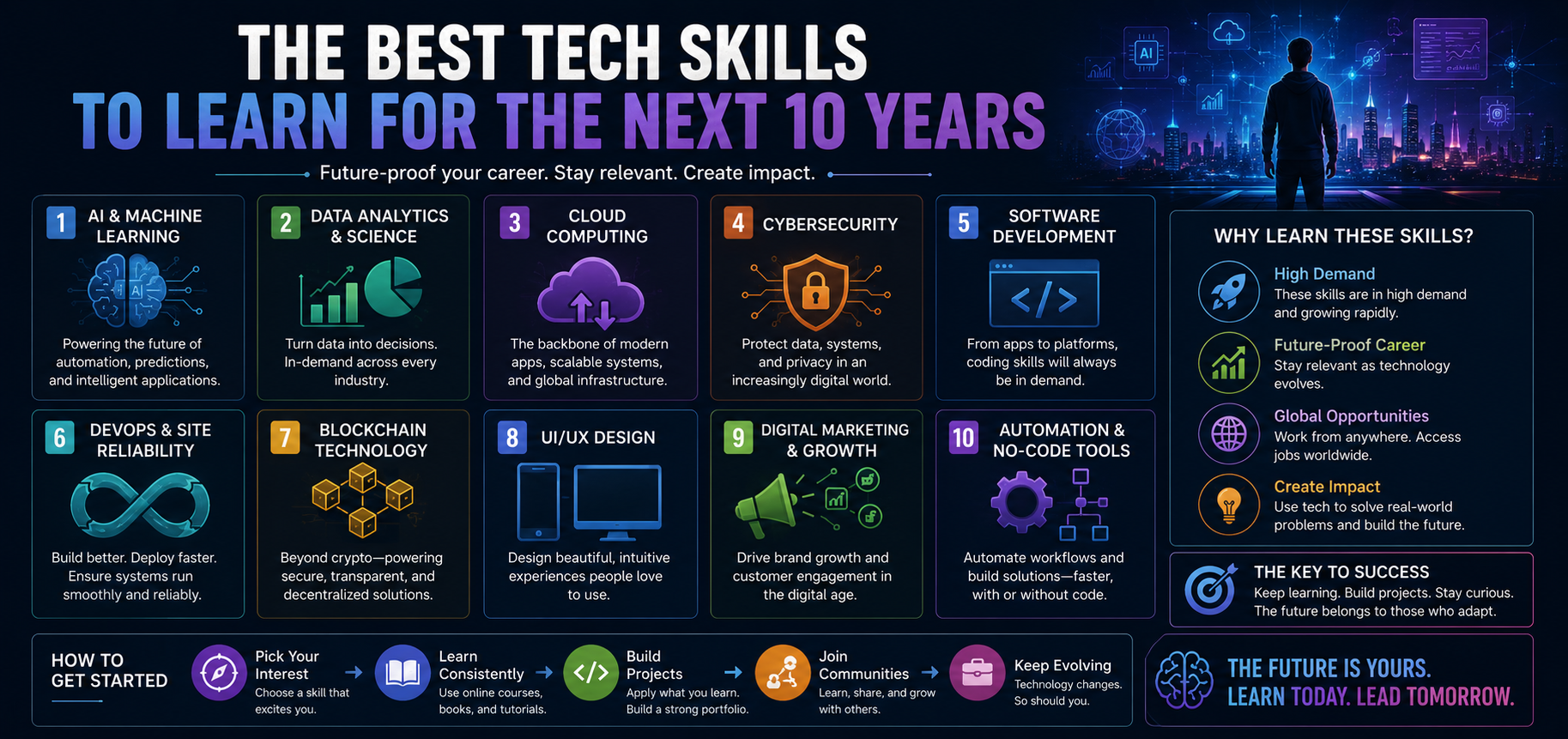
Artificial Intelligence and Machine Learning
AI is becoming a core business technology, powering everything from customer service chatbots to predictive analytics. Learning how AI systems work, including machine learning fundamentals and prompt engineering, can provide a strong competitive advantage.
Cybersecurity
As cyber threats continue to grow, organizations are investing heavily in security professionals. Skills such as ethical hacking, threat detection, network security, and risk management are expected to remain in high demand.
Cloud Computing
Businesses increasingly rely on cloud platforms to store data, run applications, and scale operations. Understanding cloud infrastructure, deployment models, and cloud security can open doors to numerous career opportunities.
Data Analytics and Data Science
Organizations generate massive amounts of data daily. Professionals who can analyze, visualize, and interpret data help businesses make smarter decisions and gain competitive advantages.
Software Development and Automation
Programming skills remain highly valuable. Knowledge of automation tools, APIs, and software development enables professionals to create solutions that improve efficiency and reduce manual work.
Emerging Technologies
Skills related to blockchain, edge computing, extended reality (XR), and quantum computing may become increasingly relevant as these technologies mature over the next decade.
Benefits and Real-World Applications
Learning future-focused tech skills offers several advantages:
Greater career flexibility
Higher earning potential
Increased job security
Access to global opportunities
Ability to participate in digital transformation initiatives
Businesses also benefit from employees who can implement modern technologies, improve operational efficiency, and drive innovation.
Professionals with expertise in AI, cybersecurity, and cloud computing are already among the most sought-after candidates across multiple industries.
Challenges and Considerations
Technology evolves quickly, making continuous learning essential. Skills that are in demand today may require updates as tools, platforms, and best practices change.
Additionally, technical expertise should be complemented by soft skills such as communication, problem-solving, and adaptability. Employers increasingly seek professionals who can bridge the gap between technology and business objectives.
Future Trends and Innovations
Over the next decade, AI-driven automation, intelligent systems, and advanced cloud technologies will likely transform most industries. Human-AI collaboration, cybersecurity resilience, and data-driven decision-making are expected to become standard business practices.
As technology becomes more integrated into daily life, professionals who combine technical knowledge with strategic thinking will be especially valuable.
Conclusion
The best tech skills to learn for the next 10 years include artificial intelligence, cybersecurity, cloud computing, data analytics, software development, and emerging technologies. While the tools may evolve, the ability to understand, adapt, and apply technology will remain a critical advantage. Investing in these skills today can help future-proof your career and position you for success in an increasingly digital world.
Search
Categories
Recent News
- 15 Common Technology Myths That Need to Die
- The Fascinating Evolution of AI: From Rule-Based Systems to Intelligent Agents
- The Environmental Impact of Modern Technology
- The Best Tech Skills to Learn for the Next 10 Years
- How to Speed Up a Slow Laptop Without Buying New Hardware
- Cloud Storage Explained: Everything You Need to Know
- Top 10 Browser Extensions That Will Instantly Make You More Productive
- 10 Emerging Technologies That Could Transform the Next Decade
Popular News
- The Modern Football Fans Secret Weapon
- 10 Common Online Habits That Put Your Personal Data at Risk
- 7 Shocking Ways Your Online Activity Is Being Tracked Right Now (And What You Can Do About It)
- 10 AI Tools That Can Save You 10+ Hours Every Week
- 10 Emerging Technologies That Could Transform the Next Decade