15 Common Technology Myths That Need to Die
Technology Tech
Share: Facebook | Twitter | Whatsapp | Linkedin
Introduction
Technology evolves rapidly, but many outdated beliefs continue to circulate online and offline. These misconceptions often influence how people use devices, manage cybersecurity, and make technology purchasing decisions. In reality, many popular tech myths are based on outdated information that no longer applies to modern hardware and software.
Understanding the facts can help users make smarter decisions, improve device performance, and stay better protected in today's digital world.
Key Concepts and Overview
Here are 15 common technology myths that deserve retirement:
Device and Hardware Myths
Closing background apps always improves performance.
Charging your phone overnight ruins the battery.
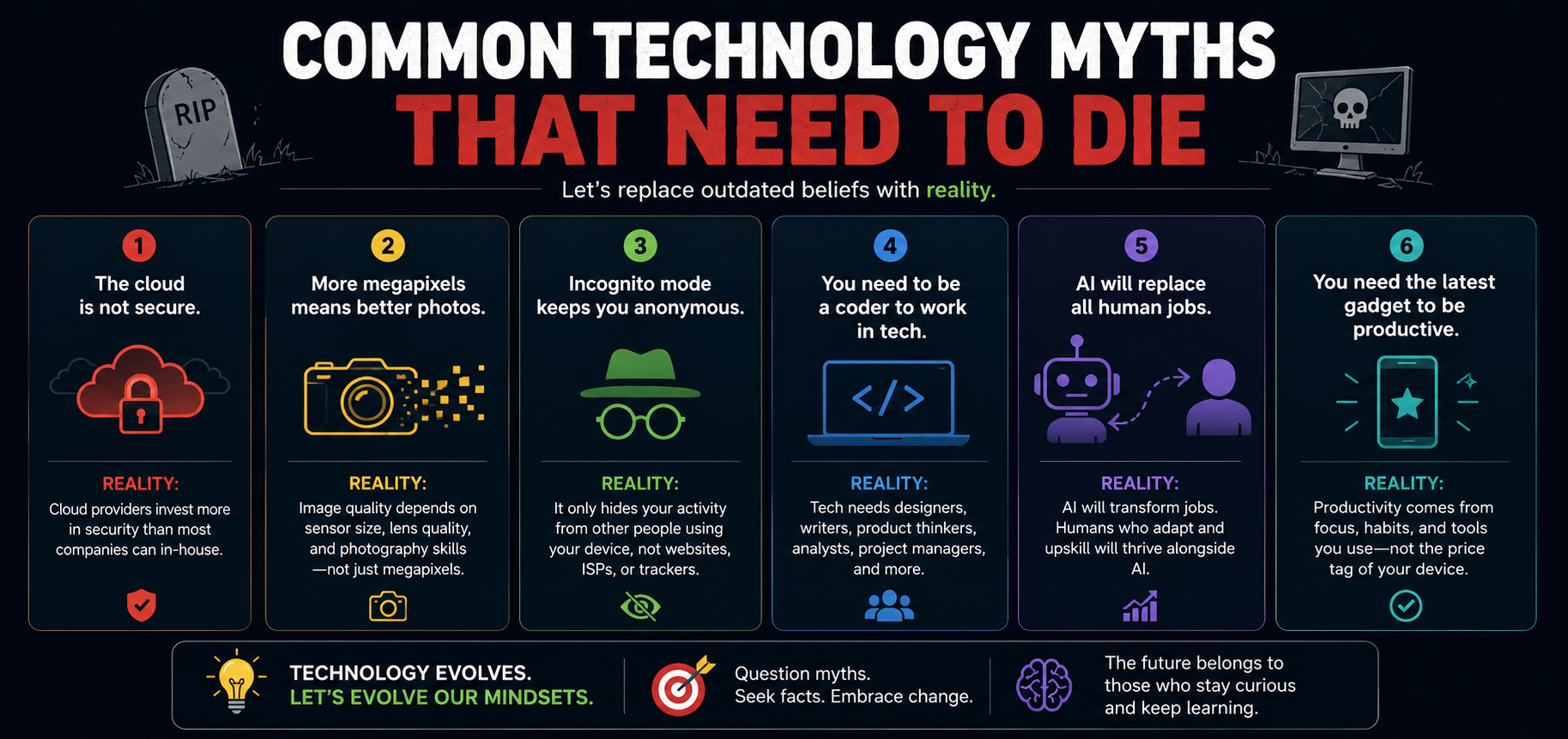
More megapixels automatically mean better camera quality.
A full battery discharge is necessary before recharging.
Mac computers cannot get viruses.
Internet and Cybersecurity Myths
Incognito mode makes you completely anonymous online.
Strong passwords alone provide complete security.
Public Wi-Fi is safe if a website uses HTTPS.
Antivirus software guarantees total protection.
Cybercriminals only target large companies.
Emerging Technology Myths
Artificial intelligence will replace every job.
Blockchain is only useful for cryptocurrency.
Cloud storage is inherently insecure.
5G networks are harmful to human health.
Smart devices are always listening to conversations.
Many of these myths originated years ago and fail to reflect advances in cybersecurity, battery management systems, cloud computing, and mobile technology.
Benefits and Real-World Applications
Separating fact from fiction helps users make informed technology decisions. For example, understanding modern battery technology can extend device lifespan, while knowing the limitations of antivirus software encourages better cybersecurity practices.
Businesses also benefit from avoiding misconceptions about cloud computing, artificial intelligence, and data security. Organizations that embrace accurate information are often better positioned to adopt innovative technologies and improve operational efficiency.
Challenges and Considerations
Technology changes faster than public perception. Advice that was accurate a decade ago may be outdated today. Social media, online forums, and word-of-mouth recommendations can unintentionally spread misinformation.
Consumers should verify claims through reputable technology sources and remain cautious about sensational headlines that oversimplify complex topics.
Future Trends and Innovations
As artificial intelligence, cloud computing, and connected devices become more integrated into everyday life, new myths will inevitably emerge. Technology literacy will become increasingly important for individuals and businesses alike.
Educational initiatives, transparent communication from technology companies, and improved digital literacy programs can help reduce misinformation and promote informed decision-making.
Conclusion
Technology myths often persist long after the facts have changed. From smartphone batteries and cybersecurity to AI and cloud computing, many common beliefs no longer reflect modern realities. Understanding how technology actually works empowers users to make smarter choices, improve security, and get the most value from today's digital tools. In a rapidly evolving tech landscape, staying informed is one of the most valuable skills of all.
Search
Categories
Recent News
- 15 Common Technology Myths That Need to Die
- The Fascinating Evolution of AI: From Rule-Based Systems to Intelligent Agents
- The Environmental Impact of Modern Technology
- The Best Tech Skills to Learn for the Next 10 Years
- How to Speed Up a Slow Laptop Without Buying New Hardware
- Cloud Storage Explained: Everything You Need to Know
- Top 10 Browser Extensions That Will Instantly Make You More Productive
- 10 Emerging Technologies That Could Transform the Next Decade
Popular News
- The Modern Football Fans Secret Weapon
- 10 Common Online Habits That Put Your Personal Data at Risk
- 7 Shocking Ways Your Online Activity Is Being Tracked Right Now (And What You Can Do About It)
- 10 AI Tools That Can Save You 10+ Hours Every Week
- 10 Emerging Technologies That Could Transform the Next Decade