Cloud Storage Explained: Everything You Need to Know
Technology Tech
Introduction
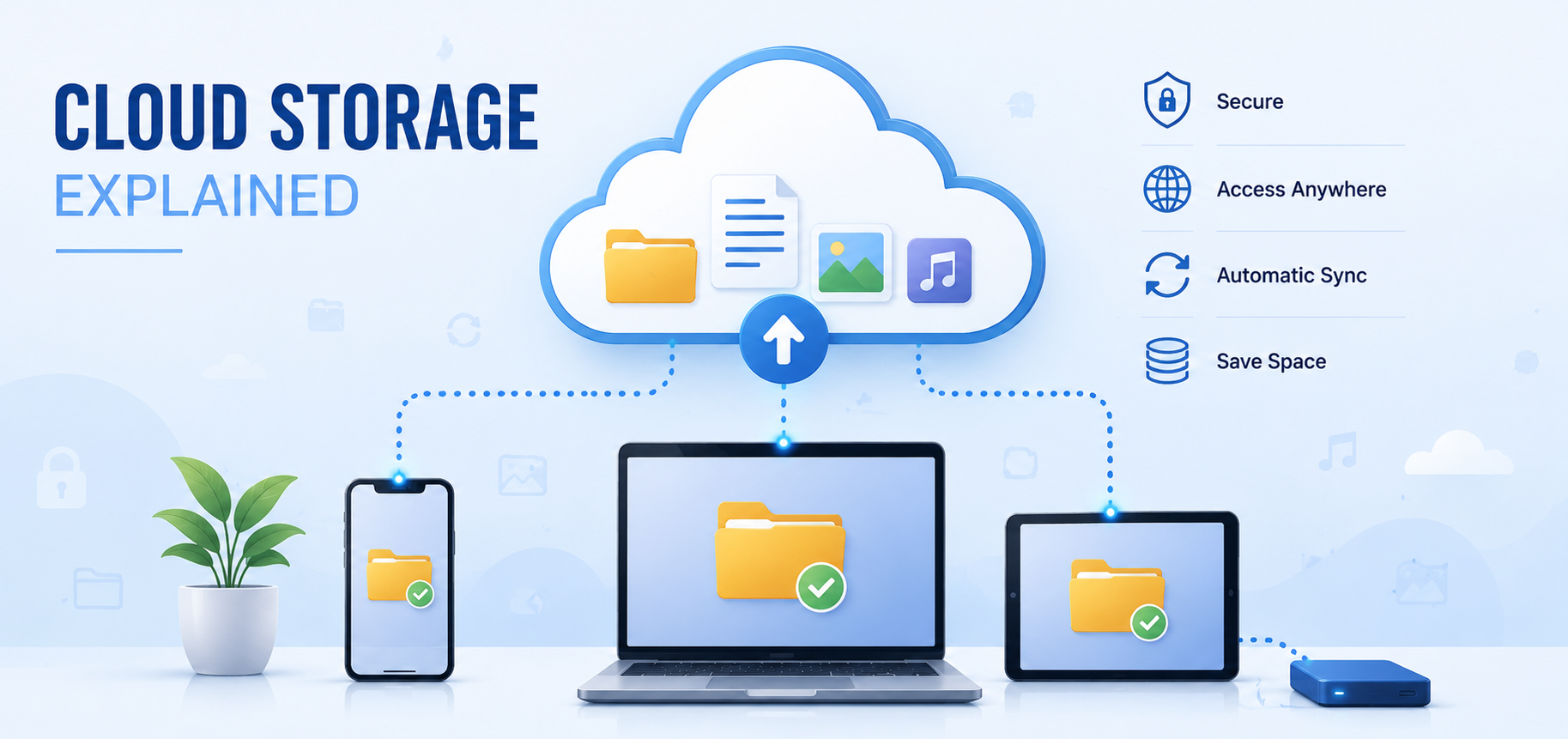
From photos and videos to business documents and application data, the amount of digital information we create continues to grow rapidly. Storing everything on a single device is no longer practical or secure. That's where cloud storage comes in. It allows users to save files on remote servers and access them from virtually anywhere with an internet connection.
Whether you're a student, business owner, or technology enthusiast, understanding cloud storage is essential in today's connected world.
Key Concepts and Overview
What Is Cloud Storage?
Cloud storage is a service that stores data on remote servers managed by a third-party provider rather than on a local computer or external hard drive. Popular platforms offer users the ability to upload, manage, share, and synchronize files across multiple devices.
How Does It Work?
When you upload a file to the cloud, it is stored in secure data centers operated by cloud service providers. These providers use advanced infrastructure, redundancy systems, and encryption technologies to ensure data availability and protection.
Most cloud storage services offer automatic synchronization, allowing changes made on one device to instantly appear on others connected to the same account.
Common Types of Cloud Storage
Public Cloud Storage – Shared infrastructure managed by providers.
Private Cloud Storage – Dedicated environments designed for specific organizations.
Hybrid Cloud Storage – A combination of public and private cloud solutions.
Benefits and Real-World Applications
Cloud storage offers several advantages for both individuals and businesses:
Accessibility and Collaboration
Users can access files from smartphones, tablets, laptops, or desktops. Teams can collaborate on projects in real time without exchanging multiple file versions.
Backup and Disaster Recovery
Cloud-based backups protect important data from hardware failures, accidental deletion, theft, and natural disasters.
Scalability
Businesses can easily increase storage capacity as their data needs grow without investing in additional physical infrastructure.
These benefits have made cloud storage a cornerstone of remote work, digital transformation, and modern business operations.
Challenges and Considerations
Despite its advantages, cloud storage is not without challenges. Data privacy, regulatory compliance, and cybersecurity remain important concerns.
Users should enable multi-factor authentication, use strong passwords, and carefully review provider security policies. Additionally, internet connectivity is required for optimal access, which can be a limitation in areas with unreliable networks.
Organizations handling sensitive information must also ensure compliance with industry regulations and data protection requirements.
Future Trends and Innovations
The future of cloud storage is increasingly tied to artificial intelligence, automation, and edge computing. AI-powered storage systems can automatically organize files, detect threats, and optimize resource allocation.
As businesses generate larger datasets, cloud providers are investing in faster infrastructure, improved encryption technologies, and sustainable data centers. These innovations will make cloud storage more efficient, secure, and accessible than ever before.
Conclusion
Cloud storage has transformed how individuals and organizations manage digital information. By providing secure, scalable, and accessible storage solutions, it enables collaboration, data protection, and business growth. As technology continues to evolve, cloud storage will remain a critical component of the modern digital ecosystem.
Search
Categories
Recent News
- 15 Common Technology Myths That Need to Die
- The Fascinating Evolution of AI: From Rule-Based Systems to Intelligent Agents
- The Environmental Impact of Modern Technology
- The Best Tech Skills to Learn for the Next 10 Years
- How to Speed Up a Slow Laptop Without Buying New Hardware
- Cloud Storage Explained: Everything You Need to Know
- Top 10 Browser Extensions That Will Instantly Make You More Productive
- 10 Emerging Technologies That Could Transform the Next Decade
Popular News
- The Modern Football Fans Secret Weapon
- 10 Common Online Habits That Put Your Personal Data at Risk
- 7 Shocking Ways Your Online Activity Is Being Tracked Right Now (And What You Can Do About It)
- 10 AI Tools That Can Save You 10+ Hours Every Week
- 10 Emerging Technologies That Could Transform the Next Decade