10 Common Online Habits That Put Your Personal Data at Risk
Technology Tech
Introduction
Every day, millions of people browse websites, use social media, shop online, and access cloud-based services without realizing how much personal information they expose. While cybercriminals use increasingly sophisticated techniques, many data breaches and privacy incidents still result from common online habits. Understanding these risks is the first step toward protecting your digital identity and maintaining online security.
Key Concepts and Overview
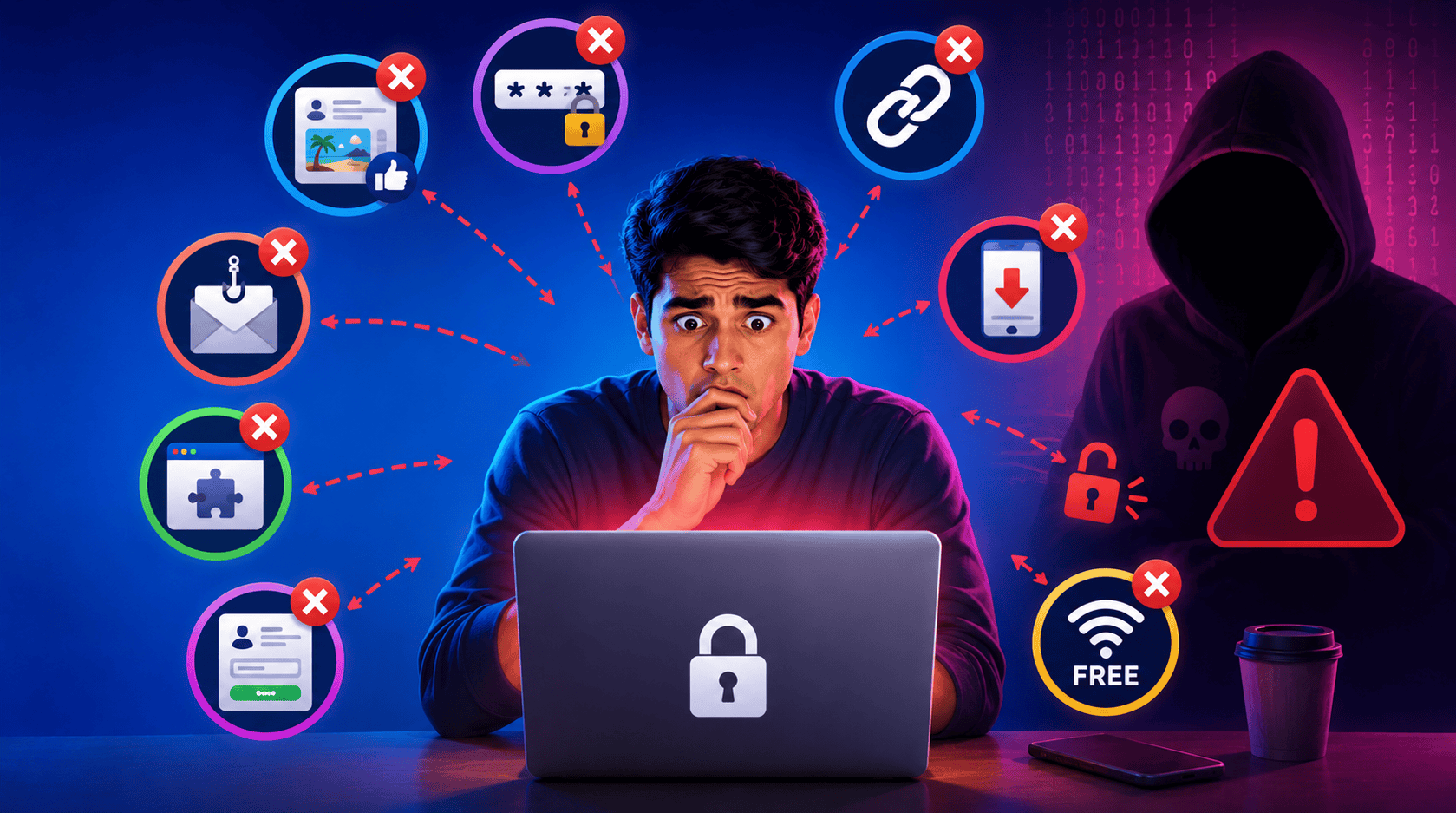
1. Reusing the Same Password Everywhere
Using one password across multiple accounts makes it easier for attackers to gain access if a single account is compromised.
2. Ignoring Software Updates
Outdated operating systems, browsers, and apps often contain security vulnerabilities that hackers actively exploit.
3. Clicking Unknown Links
Phishing emails and fake websites remain among the most effective cyberattack methods. A single click can expose sensitive information.
4. Oversharing on Social Media
Publicly sharing birthdays, locations, workplaces, or family details can provide valuable information for identity theft and social engineering attacks.
5. Using Public Wi-Fi Without Protection
Unsecured networks can expose browsing activity and login credentials to cybercriminals.
6. Skipping Multi-Factor Authentication (MFA)
Passwords alone are no longer sufficient protection. MFA adds an extra security layer that significantly reduces account takeover risks.
7. Downloading Files from Untrusted Sources
Malicious downloads may contain spyware, ransomware, or other harmful software.
8. Accepting Every App Permission
Many apps request access to contacts, location, cameras, and microphones even when unnecessary.
9. Storing Sensitive Information Insecurely
Saving passwords or financial details in unprotected notes or documents increases exposure if a device is compromised.
10. Ignoring Privacy Settings
Many users never review account privacy controls, leaving more personal information visible than intended.
Benefits and Real-World Applications
Developing safer online habits can significantly reduce cybersecurity risks. Strong passwords, regular software updates, and multi-factor authentication help protect personal accounts and business data.
For organizations, encouraging cybersecurity awareness among employees can reduce the likelihood of phishing attacks, data breaches, and unauthorized access incidents. Even simple behavioral changes can strengthen overall digital security.
Challenges and Considerations
One challenge is balancing convenience with security. Many users prioritize speed and ease of access over privacy protection. Additionally, cyber threats evolve continuously, requiring individuals to stay informed about emerging risks.
Businesses must also ensure employees receive regular cybersecurity training to adapt to changing attack methods.
Future Trends and Innovations
Artificial intelligence is increasingly being used for threat detection, fraud prevention, and account security. Passwordless authentication, biometric verification, and advanced behavioral analysis are expected to become more common in the coming years.
As privacy concerns grow, technology companies are also introducing stronger security controls and greater transparency around data collection practices.
Conclusion
Protecting personal data begins with everyday online behavior. Habits such as reusing passwords, ignoring updates, and oversharing information can create unnecessary security risks. By adopting safer digital practices and leveraging modern security tools, individuals and businesses can significantly reduce their exposure to cyber threats and enjoy a safer online experience.
Search
Categories
Recent News
- 15 Common Technology Myths That Need to Die
- The Fascinating Evolution of AI: From Rule-Based Systems to Intelligent Agents
- The Environmental Impact of Modern Technology
- The Best Tech Skills to Learn for the Next 10 Years
- How to Speed Up a Slow Laptop Without Buying New Hardware
- Cloud Storage Explained: Everything You Need to Know
- Top 10 Browser Extensions That Will Instantly Make You More Productive
- 10 Emerging Technologies That Could Transform the Next Decade
Popular News
- The Modern Football Fans Secret Weapon
- 10 Common Online Habits That Put Your Personal Data at Risk
- 7 Shocking Ways Your Online Activity Is Being Tracked Right Now (And What You Can Do About It)
- 10 AI Tools That Can Save You 10+ Hours Every Week
- 10 Emerging Technologies That Could Transform the Next Decade